Should You Run a Background Check Before a Date?
Meeting someone online is exciting. But let’s be honest—it can also be a little nerve-racking.
Dating apps make it easy to connect with new people, yet they also make it easy for someone to exaggerate, hide important details, or even create an entirely fake identity. That’s why more singles are performing a background check before a date before agreeing to meet in person.
The good news? You don’t have to spend hours searching Google or digging through dozens of public record websites. Modern people-search services like TruthFinder compile information from many public sources into a single report, making it much easier to verify someone’s identity before your first date. In this guide, you’ll learn when a background check makes sense, what information you may be able to uncover, and how to use it responsibly.
Why More People Are Running Background Checks Before First Dates

Online Dating Has Changed Everything
Online dating has made meeting new people easier than ever. With just a few taps, you can start chatting with someone nearby.
That’s exciting!
But it also means you’re often meeting a complete stranger.
Most people online are honest. Still, fake profiles, old photos, romance scams, and misleading stories do happen. That’s why more singles are doing a quick background check before a date.
It’s not about being paranoid. It’s about being careful.
Personal Safety Comes First
Before meeting someone in person, it makes sense to verify basic details. Their name. Their age. Their location. Maybe even their public records.
A people-search tool like TruthFinder can help pull public information into one report. That may save you from searching many websites on your own.
It can also give you more peace of mind before the first meeting.
Still, a background check should not replace smart dating habits. Meet in public. Tell a friend where you’re going. Trust your gut.
If something feels off, pause.
Your safety matters more than being polite.
Peace of Mind Before Meeting Someone New
A background check before a date can help you feel more confident. Not because you expect something bad.
But because you want to know who you’re meeting.
TruthFinder can be useful here because it helps organize public records in one place. That makes the process easier, especially when you only have a name, phone number, or city.
Use it as a safety tool.
Not as a way to judge someone unfairly.
Situations Where a Background Check Makes Sense

Not every first date calls for a background check. In many cases, you’ll chat for weeks, video call a few times, and feel comfortable before meeting.
But sometimes things don’t feel quite right.
Maybe the person is rushing the relationship. Maybe their story keeps changing. Or maybe you’re simply meeting someone you’ve never seen in person before.
Running a background check before a date can help you verify public information and make a more informed decision. Here are a few situations where it makes the most sense.
You’re Meeting Someone From a Dating App
Dating apps introduce millions of people every year. While many relationships begin this way, it’s important to remember that anyone can create a profile.
Photos can be old. Names can be fake. Jobs and locations can be exaggerated.
Before meeting someone for the first time, many people like to verify the information they’ve been given. Even confirming a person’s full name and general location can provide extra confidence.
If you only know a few details, TruthFinder can help search public records using information like a name, phone number, or email address. It can save you from spending hours searching multiple websites yourself.
Their Story Doesn’t Quite Add Up
Everyone forgets little details now and then.
But if someone’s age changes, their job sounds different every week, or they avoid answering simple questions, it’s worth paying attention.
Small inconsistencies don’t always mean someone is lying. There may be a simple explanation.
Still, if several things don’t match, verifying publicly available information can help you separate facts from fiction.
A background check can often confirm basic details like previous addresses, known aliases, or other public records that may help clear up confusion.
They Avoid Video Calls
Video calls aren’t required before every first date.
However, if someone repeatedly refuses to video chat while making excuses for weeks or months, that’s a warning sign many dating experts mention.
Some scammers avoid live video because they aren’t the person shown in their photos.
Seeing someone face-to-face before meeting can help confirm you’re talking to the same person.
If they continue avoiding video calls, a background check may provide another way to verify their identity before meeting in person.
They Ask for Money
This is one of the biggest red flags in online dating.
If someone you’ve never met asks for money, gift cards, cryptocurrency, or help paying bills, stop and think carefully.
Romance scammers often build trust before asking for financial help. Once money is sent, getting it back is very difficult.
Running a background check won’t stop every scam, but it may uncover information that doesn’t match the story you’re being told.
Never feel pressured to send money to someone you’ve only met online.
You’re Planning to Meet Alone
Meeting at a coffee shop or busy restaurant is usually much safer than meeting at someone’s home.
If you’re planning to spend time alone with someone you’ve never met before, taking a few extra precautions makes sense.
A background check is one of several simple steps you can take before the date. It works best when combined with common-sense safety habits like sharing your location with a trusted friend, arranging your own transportation, and meeting in a public place first.
TruthFinder can help you verify publicly available information before that first meeting, giving you a little more confidence while you focus on getting to know the person—not worrying about who they really are.
What Can TruthFinder Help You Discover?
If you’re thinking about running a background check before a date, you’re probably wondering what you can actually find.
The answer depends on the information that is publicly available. No background check service knows everything about a person. However, a service like TruthFinder can gather records from many public sources and organize them into one easy-to-read report.
Instead of jumping from website to website, you can often find several useful pieces of information in one place. That makes it much easier to verify whether someone is who they say they are.
Let’s look at the types of information you may be able to discover.
Verify Their Identity
One of the biggest reasons people use TruthFinder is to confirm someone’s identity.
If you’ve only been given a first name or phone number, you may be able to learn more through a search. Depending on the available public records, a report may include a person’s full name, approximate age, known aliases, and address history.
This can help you answer simple questions before meeting someone.
- Is this their real name?
- Have they lived where they said they lived?
- Do the details they’ve shared match public records?
Most of the time, you’ll find that everything lines up. And that’s reassuring.
Find Publicly Available Records
TruthFinder can also search many types of public records.
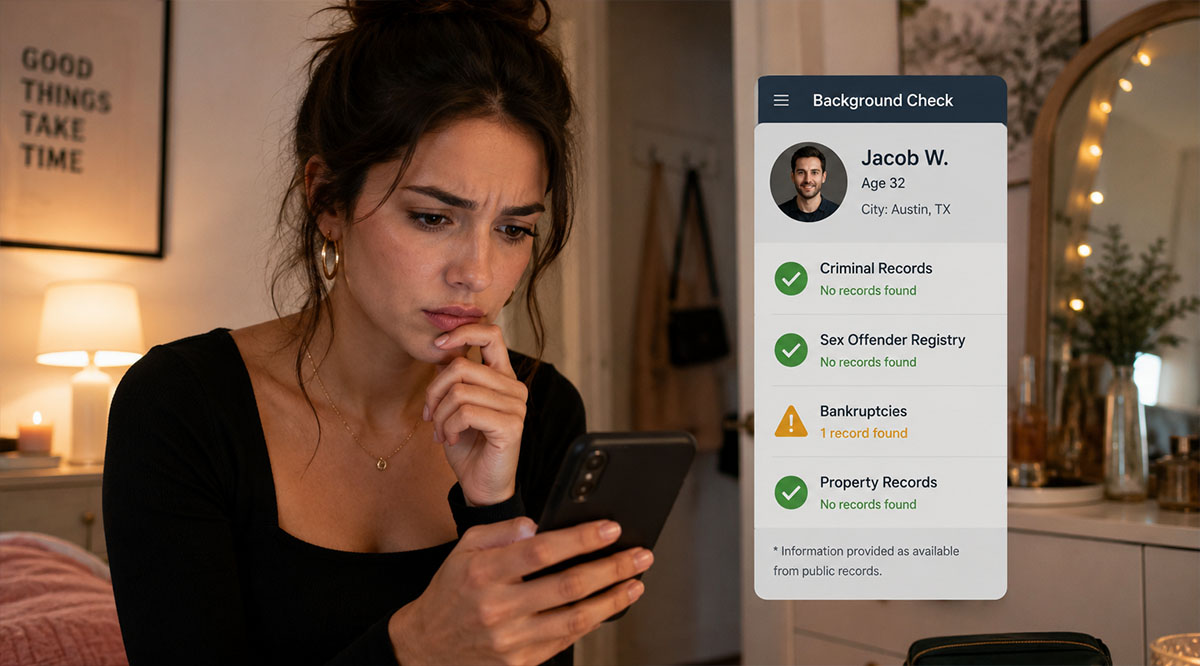
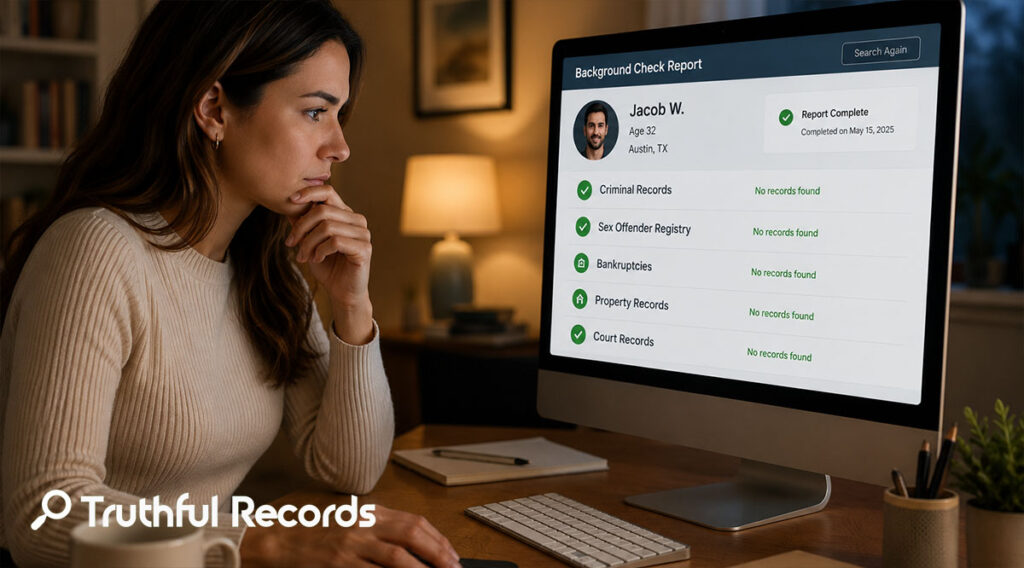
Depending on what’s available, a report may include information related to criminal records, court records, traffic violations, bankruptcies, liens, or property ownership.
Keep in mind that not every person will have records to display. Also, records can vary depending on the state or county where someone has lived.
If you do find something surprising, don’t jump to conclusions right away. Read the details carefully. Public records don’t always tell the full story, and some information may be old or incomplete.
Locate Contact Information
Sometimes you don’t have much information to work with.
Maybe you only have a phone number from a dating app. Or perhaps you know an email address but not much else.
TruthFinder may help connect those details to publicly available information, including possible phone numbers, email addresses, previous addresses, and social media profiles.
This can make it easier to verify that the person you’re talking to has a consistent online presence.
Fill In Missing Pieces
A background check isn’t about spying on someone.
It’s about filling in gaps when something doesn’t seem quite right.
TruthFinder may help uncover information such as previous cities where someone lived, possible relatives, business affiliations, or other publicly available records that provide a clearer picture.
Many people never need this information.
But when you’re preparing to meet someone you’ve never met before, having a little extra knowledge can provide valuable peace of mind.
Instead of spending hours searching Google, social media, and public record websites one by one, TruthFinder puts much of that publicly available information into a single report. That means you can spend less time researching and more time deciding whether you’re comfortable moving forward with your date.
How to Run a Background Check Before a Date
Running a background check before a date is much easier than most people think.
Years ago, you had to search several public record websites and hope you found the right person. That could take hours.
Today, the process is much faster.
If you have a person’s name, phone number, email address, or city, you may already have enough information to begin your search. Here’s a simple step-by-step process you can follow.
Step 1: Gather Basic Information
Start by collecting the information you already know.
You don’t need every detail about someone. Even a few pieces of information can help narrow your search.
Useful information includes:
- First and last name
- Approximate age
- Current city or state
- Phone number
- Email address
- Username from a dating app or social media
The more accurate the information, the easier it will be to identify the correct person.
If you’ve only exchanged a few messages, don’t worry. Many people begin with just a name and city.
Step 2: Search Using TruthFinder
Once you have some basic information, you can begin your search with TruthFinder.
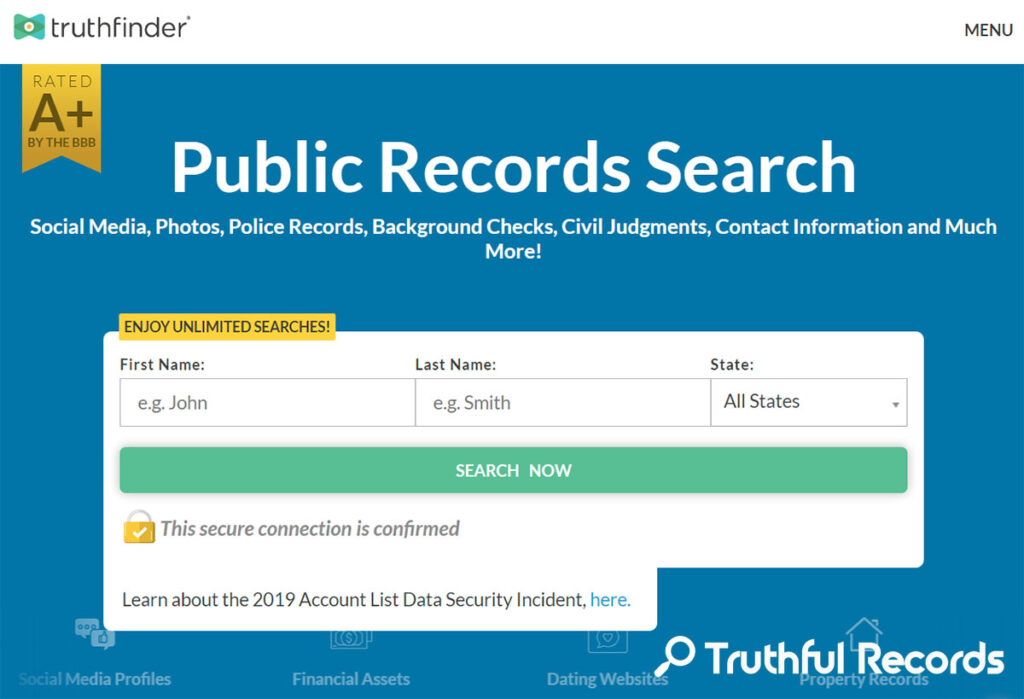
Simply enter the person’s name into the search tool. If you know the city or state where they live, adding that information can help narrow the results.
TruthFinder searches billions of publicly available records and organizes the information into one report. Instead of opening dozens of websites, you can review many public records in one place.
Depending on what’s available, you may find:
- Full name
- Known aliases
- Address history
- Phone numbers
- Email addresses
- Possible relatives
- Social media profiles
- Court records
- Criminal records where publicly available
- Property records
Not every report contains all of these details. The amount of information depends on what public records exist for that individual.
For many people, this step alone saves a lot of time compared to doing everything manually.
Step 3: Verify the Information
Finding information is only the first step.
Take a few minutes to compare what you found with what the person has already told you.
Ask yourself a few simple questions.
- Does the name match?
- Does the age seem correct?
- Have they lived where they claimed?
- Do their phone number and email make sense?
- Are there any major inconsistencies?
Small differences don’t always mean someone is being dishonest.
People move. They change jobs. They may use nicknames or have outdated online profiles.
What you’re looking for are major red flags, not tiny mistakes.
If you notice several things that don’t match, it may be worth asking questions before agreeing to meet.
Don’t Rely on Just One Source
Even the best background check services can contain outdated or incomplete information.
That’s why it’s smart to verify important details using more than one source whenever possible.
You can compare what you find with:
- Google searches
- Public social media profiles
- Professional networking sites
- County court records
- News articles
Looking at several sources gives you a more complete picture.
Remember Why You’re Doing It
A background check shouldn’t replace getting to know someone.
Instead, think of it as one more safety tool.
The goal isn’t to invade someone’s privacy or judge them unfairly. It’s simply to verify publicly available information before meeting someone you’ve never met in person.
If everything checks out, great! You’ll probably feel much more confident about your upcoming date.
And if you discover something that raises concerns, you’ll be glad you took a few extra minutes to do your homework before meeting face to face.
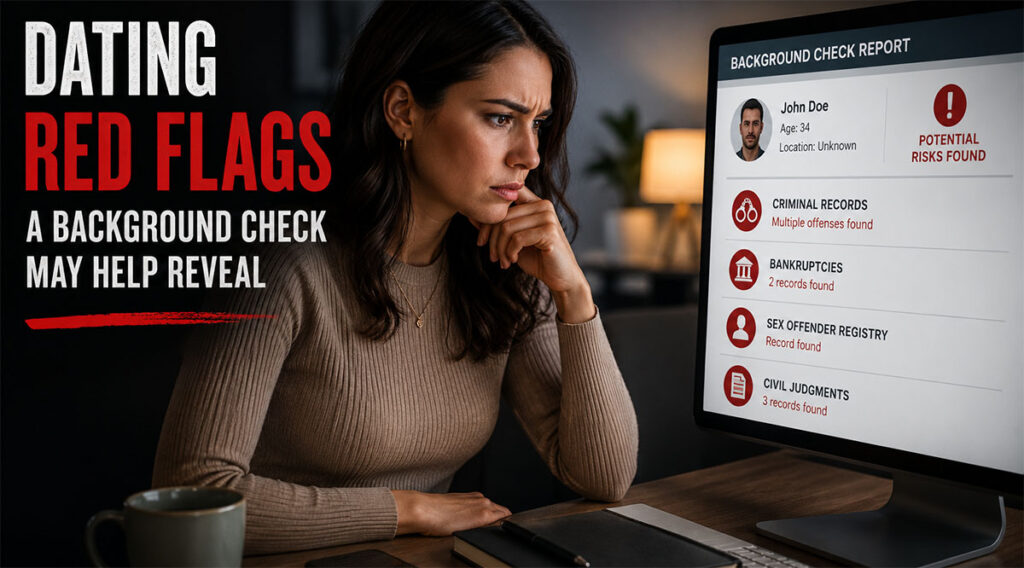
Dating Red Flags a Background Check May Help Reveal
Most first dates turn out just fine.
In fact, you’ll probably discover that the person you’ve been talking to is exactly who they claimed to be. That’s the best-case scenario.
Still, it’s smart to know what warning signs to watch for before meeting someone new. A background check can’t predict someone’s behavior or tell you everything about them. However, it may uncover publicly available information that doesn’t match the story you’ve been told.
Here are a few red flags worth paying attention to.
Fake Identity
One of the biggest concerns with online dating is meeting someone who isn’t who they claim to be.
Maybe they use a fake name. Maybe their age is different. Or perhaps the photos on their profile belong to someone else.
These situations are more common than many people realize.
A background check can sometimes help confirm basic details like a person’s full name, approximate age, address history, and known aliases. If several pieces of information don’t match, it’s worth asking more questions before meeting.
Honest people usually have no problem explaining simple differences.
Hidden Criminal History
Everyone deserves to be treated fairly.
At the same time, your personal safety should always come first.
Depending on the available public records, a background check may reveal criminal cases, court records, or other legal information. That doesn’t automatically mean someone is dangerous.
For example, an old traffic offense is very different from a history of violent crimes.
If you do find criminal records, take time to understand what they actually mean. Read the details carefully instead of assuming the worst.
The goal is to make informed decisions, not quick judgments.
Multiple Aliases
Many people use nicknames.
Some women change their last name after marriage. Others may use a middle name instead of a first name.
That’s completely normal.
However, numerous names connected to the same person could be worth looking into, especially if the names don’t match what you’ve been told.
TruthFinder may help identify known aliases that appear in publicly available records. This can make it easier to verify that you’re researching the correct person.
Romance Scam Indicators
Romance scammers often follow similar patterns.
They build trust quickly. They shower you with compliments. Then they begin asking for money or personal information.
Some claim they’re traveling overseas. Others invent emergencies that require immediate financial help.
A background check may reveal that important parts of their story don’t line up with public records.
While no background check can identify every scammer, verifying someone’s identity is one more way to protect yourself before emotions become involved.
Never send money to someone you’ve only met online.
Conflicting Personal Information
Sometimes the biggest warning sign isn’t one large lie.
It’s several small ones.
Maybe they said they live in one city, but public records suggest they’ve never lived there. Maybe their age changes during conversations. Or perhaps the phone number they gave doesn’t seem connected to them at all.
One inconsistency isn’t always a problem.
Several inconsistencies deserve a closer look.
TruthFinder can help organize publicly available information into one report, making it easier to compare the facts with what you’ve been told.
Trust Your Instincts
Even if a background check doesn’t reveal anything unusual, always listen to your instincts.
If something feels wrong, you don’t owe anyone a date.
Meet in a public place. Tell a trusted friend where you’ll be. Arrange your own transportation, and avoid sharing personal information too soon.
A background check is simply another layer of protection. It works best when combined with good judgment and smart dating habits.
Sometimes the biggest benefit isn’t finding a red flag at all. It’s gaining the confidence that comes from knowing you’ve done your homework before meeting someone new.
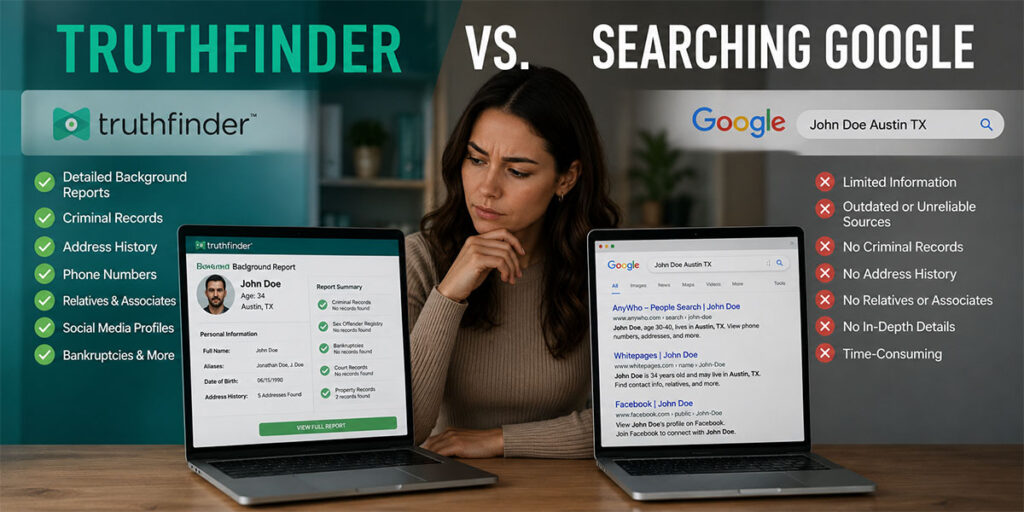
TruthFinder vs. Searching Google
When you want to learn more about someone, your first instinct is probably to open Google.
There’s nothing wrong with that.
In fact, Google is a great place to start. A quick search can uncover news stories, public social media profiles, business websites, and other information that’s freely available online.
But after a few searches, most people realize something.
Finding useful information isn’t always easy.
You may spend an hour clicking links and still come away with more questions than answers. That’s why many people choose a background check service instead.
Let’s compare the two options.
Google Search Limitations
Google only shows information that has been indexed on public websites.
If important records aren’t published online or are buried deep inside government databases, they may never appear in your search results.
Another challenge is sorting through people with the same name.
Search for “John Smith,” and you’ll probably find thousands of results. Figuring out which one is the person you’re dating can become frustrating very quickly.
Google searches also require a lot of manual work.
You might search:
- County court websites
- Property records
- News articles
- Phone lookup websites
Each website provides only a small piece of the puzzle.
Before long, you’ve opened dozens of browser tabs just trying to confirm a few basic facts.
Why People Use TruthFinder Instead
TruthFinder was designed to make the process much easier.
Instead of visiting multiple websites, you can search one place and review information gathered from many publicly available records.
Depending on the available records, a report may include:
- Full name
- Known aliases
- Address history
- Phone numbers
- Email addresses
- Possible relatives
- Property records
- Court records
- Criminal records where publicly available
- Social media profiles
Having this information organized into a single report can save a significant amount of time.
It also makes it easier to compare what you’ve learned with what someone has shared during your conversations.
For many people, that’s the biggest advantage.
Which Option Is Better?
The answer depends on your goal.
If you’re simply curious about someone, a Google search may be enough.
But if you’re trying to verify someone’s identity before meeting for the first time, a dedicated people-search service can often provide a more complete picture.
Many people actually use both.
They start with Google to see what’s publicly available, then use TruthFinder to search additional public records and organize the results into one report.
That combination gives you a broader view without spending hours jumping between websites.
A Quick Comparison
| TruthFinder | |
|---|---|
| Free to use | Paid subscription |
| Requires searching many websites | One search can gather information from many public record sources |
| Results can be scattered | Information is organized into a single report |
| Limited by what appears in search results | Searches billions of public records, where available |
| Time-consuming | Can save time by putting information together |
Neither option guarantees perfect or complete information.
Public records can change over time, and some information may be outdated or unavailable.
That’s why it’s always a good idea to verify important details using more than one source.
If you’re preparing for a first date and want extra peace of mind, TruthFinder can make the research process much faster. Instead of doing all the work yourself, you can review one organized report and decide whether you’re comfortable moving forward.
Sometimes, knowing what doesn’t show up can be just as reassuring as finding information that does.
Frequently Asked Questions
Is it weird to run a background check before a date?
Not at all.
More people are doing it than ever before, especially if they met through a dating app or social media. Running a background check before a date isn’t about spying on someone. It’s about making sure the person is who they say they are.
Think of it as another safety step, just like meeting in a public place or telling a friend where you’re going.
Can someone tell if I searched for them?
No.
When you perform a search using TruthFinder, the other person is not notified. Your search is private, so they won’t receive an alert or message letting them know you looked them up.
This allows you to verify publicly available information before deciding whether to meet in person.
How accurate are people-search reports?
People-search reports are only as accurate as the public records they collect.
Most reports pull information from government records and other publicly available sources. However, records can sometimes be outdated, incomplete, or belong to someone with a similar name.
That’s why it’s always a good idea to review the information carefully and, when necessary, verify important details using more than one source.
Is TruthFinder anonymous?
Yes.
TruthFinder searches are confidential. The person you’re searching for won’t know you’ve looked them up.
This makes it easy to do your own research privately before a first date.
How long does a TruthFinder search take?
Most searches begin within minutes.
The exact time depends on how much public information is available for the person you’re searching. Reports with more records may take a little longer to compile.
Once the report is ready, you can review the available information in one place instead of searching multiple websites yourself.
What should I do if I find something concerning?
Don’t panic.
First, make sure you’ve found the correct person. People with similar names can easily be confused.
Next, read the information carefully. A public record doesn’t always tell the whole story. For example, a dismissed case or an old traffic ticket may not be as serious as it first appears.
If several major red flags show up or the information doesn’t match what you’ve been told, it’s okay to postpone or cancel the date.
Your safety should always come first.
Can I run a background check with just a phone number?
In some cases, yes.
If you have someone’s phone number, TruthFinder may be able to connect it to publicly available information, depending on the records available. This can be helpful if you’ve only communicated by text or through a dating app.
Will a background check show everything about a person?
No.
No background check service can guarantee complete or perfect information. Some records are sealed, expunged, restricted, or simply unavailable to the public.
A background check is best used as one tool among many. Combine it with good judgment, open communication, and smart dating safety habits for the best results.
Disclaimer
This article is for informational purposes only and should not be considered legal advice.
TruthFinder searches publicly available records and is intended for personal use only. It is not a consumer reporting agency as defined by the Fair Credit Reporting Act (FCRA). You should not use TruthFinder to make decisions about employment, tenant screening, credit, insurance, professional licensing, or any other purpose covered by the FCRA.
Information found in public records may be incomplete, outdated, or unavailable in some cases. Always verify important information through multiple sources and use good judgment when making personal decisions.
If you’re meeting someone for the first time, remember that a background check is only one part of staying safe. Meet in a public place, let a trusted friend know where you’re’ll be, and trust your instincts.